What is Cross-Sector Analysis?
Most analysis is structured by industry.
- retail
- finance
- technology
- travel
Each is treated as separate.
This no longer reflects reality.
The same behavioral systems now operate across all of them.
Cross-sector analysis asks a different question:
What patterns exist regardless of industry?
It looks at:
- how people behave
- how systems shape decisions
- how identity, trust, and participation operate
Instead of:
What is happening in this sector?
It asks:
What is happening everywhere?
The System Layer Beneath Industries
Across sectors, the same structures appear repeatedly:
Attention Systems
Feeds, scrolling, autoplay
Trust Systems
Verification, comparison, skepticism
Identity Systems
Posting, signaling, affiliation
Economic Systems
Subscriptions, credit, pricing logic
Distribution Systems
Algorithms, creators, networks
These are not sector-specific.
They are:
shared cultural infrastructure
Why This Matters
When the same systems operate everywhere:
- industries stop behaving independently
- behaviors transfer across categories
- expectations carry over
Examples:
- Subscription fatigue affects media, retail, fitness, software
- Verification culture affects luxury, finance, healthcare
- Identity signaling shapes fashion, travel, technology
This means:
A change in one sector is rarely isolated.
It is:
system-wide
What Cross-Sector Analysis Reveals
Cross-sector work identifies:
Structural Shifts
Changes that affect multiple industries at once
Behavioral Patterns
Actions that repeat across different contexts
System Conflicts
Where different systems create tension
Transfer Effects
Where behavior learned in one domain appears in another
This is where most insight comes from.
Not from:
- individual sectors
But from:
the interaction between them
What This Means for Brands
1. You are not competing only in your category
You are competing inside shared systems.
2. Behavior transfers across industries
Users bring expectations from elsewhere.
3. Positioning must reflect system reality
Not just category norms.
4. Risk is systemic, not isolated
Changes in one system affect all participants.
5. Advantage comes from system awareness
The strongest brands understand:
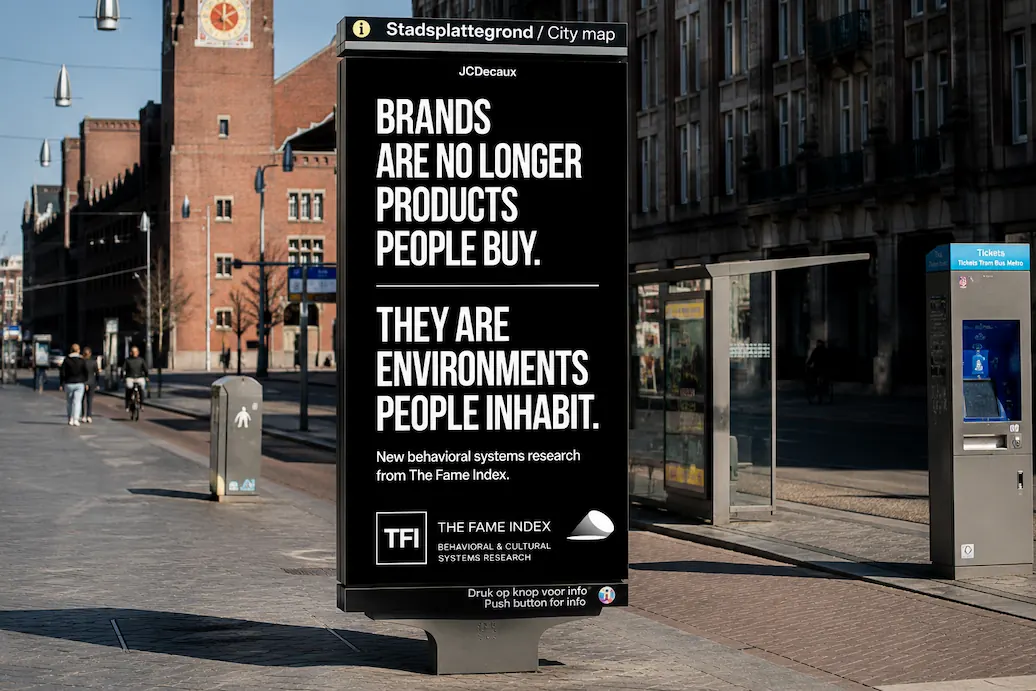
how behavior works across environments
The Key Shift
The shift is simple:
Industries are becoming less important.
Systems are becoming more important.
The question is no longer:
What sector are we in?
It is:
What system are we operating inside?