The Core Shift
ownership-based luxury
→
participation-controlled luxury systems

ownership-based luxury
→
participation-controlled luxury systems
The luxury market is not being disrupted by resale in the way many assume. The threat is not simply that consumers are buying second-hand instead of new, or choosing dupes over originals. The deeper shift is that luxury is being reorganised around a new question: who controls participation?
For decades, luxury brands competed on visibility, desirability and scarcity. The logic was simple: build myth, restrict access, raise prices, and convert aspiration into purchase.
But the rise of resale platforms, replica literacy, dupe culture and algorithmic fashion feeds has changed the structure of luxury participation. Consumers no longer need to buy directly from a brand to take part in its symbolic world. They can enter through resale, imitation, styling, content, authentication debates, price-tracking, archive hunting or even refusal.
That does not destroy luxury. In many cases, it strengthens it. But it does separate the brands that control their ecosystems from those that merely remain visible inside them.
The evidence suggests at least four distinct luxury positions are emerging.
Hermès represents control through denial. Its power lies in friction. Access is opaque, slow and ritualised. The “Hermès game” is not an accidental frustration; it is part of the brand’s status machinery. Pre-spend, appointment rituals, sales-associate relationships, resale benchmarking and orange-box unboxing all reinforce the same logic: the harder the object is to obtain, the more powerful the signal becomes. Resale does not weaken Hermès. It often strengthens the asset story.
Chanel represents control through service and continuity. It is less inaccessible than Hermès but far more institutionally embedded than trend-led brands. Chanel’s power comes from appointment systems, repair-and-keep rituals, seasonal code literacy, beauty entry points, price-step anticipation and heirloom narratives. Its resale presence introduces risk — asset-math can displace romance — but the brand still converts ownership into belonging. Chanel’s genius is not pure scarcity; it is lifecycle control.
Louis Vuitton represents control through ubiquity. It survives the age of resale and duplication by becoming unavoidable. Airports, sports ceremonies, travel retail, architecture, celebrity culture, resale rankings, app-based care and monogram recognition make Louis Vuitton less like a fashion label and more like status infrastructure. Dupes and replicas may dilute exclusivity, but they also reinforce LV as the default visual template for luxury. The brand benefits from circulation because resale systems orbit around it.
Gucci is the warning case. It remains famous, but fame no longer guarantees conversion. Gucci’s 2025 profile shows high residual recognition and heritage capital, yet sharp weakness in identity lock and purchase urgency. The brand is visible everywhere, but that visibility has become less action-driving. Logo fatigue, counterfeit saturation, crisis discourse and fragmented identity meanings have turned Gucci into an ambient symbol rather than a necessary one.
This is the new luxury split.
Brands can win by being extremely hard to access. They can win by being unavoidable. They can win by embedding customers into service, repair, resale and ritual systems. What they cannot do is rely on visibility alone.
That is the central market shift. Resale, dupes and digital platforms are not simply taking demand away from luxury brands. They are exposing which brands still control the terms of participation. Hermès controls the gate. Chanel controls the lifecycle. Louis Vuitton controls the environment. Gucci, at least in this dataset, risks becoming culturally present but behaviourally weakened.
The old luxury model was built around ownership: buy, own, signal. The new model is circular: desire, access, authenticate, display, resell, reinterpret, repeat. In that loop, brands do not only compete for purchases. They compete to define the rituals around acquisition, proof, use, resale and status.
This is why resale is not anti-luxury. It is becoming part of luxury’s infrastructure. The strongest brands use resale to reinforce value, longevity and legitimacy. The weakest are exposed by it: their products circulate, but their meanings do not deepen.
The strategic implication is clear. Luxury brands should stop treating resale and imitation as merely defensive problems. The question is not whether secondary markets grow. They will. The question is whether a brand can convert circulation into authority.
For Hermès, that means preserving the core gate while allowing peripheral participation without dilution. For Chanel, it means deepening service, repair and heirloom rituals so asset speculation does not overpower emotional permanence. For Louis Vuitton, it means turning ubiquity into stewardship rather than saturation. For Gucci, the challenge is sharper: rebuild controlled desire, not just cultural noise.
In a world of resale, dupes and algorithmic visibility, luxury brands no longer compete on fame. They compete on control.
This analysis is based on 2024–25 behavioral data.
The 2026 external signals below were not available at the time. They are included as a retrospective test: whether reality has moved in line with the system we observed.
1. Hermès: Control Through Denial (The Asset Lock) In Q1 2026, Hermès reported a 6% revenue increase (reaching €4.1bn) despite a cooling global luxury market. While competitors saw declines, Hermès’ "Asset Math" held firm because its supply remains decoupled from demand. The brand’s power is now explicitly tied to its role as a "Safe Haven Asset"; in the US, sales grew by 17%, proving that the harder the "Hermès game" becomes, the more resilient the brand's capital.
2. Chanel: Control Through Service & Lifecycle (The Heirloom Pivot) Chanel has successfully institutionalized its "lifecycle control." On April 2, 2026, Chanel implemented its fourth rhythmic price hike in 18 months, pushing the Classic Medium Flap toward the $12,000 threshold. This is no longer just inflation; it is Lifecycle Governance. By integrating Blockchain-backed Digital Product Passports (DPP) into every bag sold in the EU by 2026, Chanel now tracks and services its items through the secondary market, converting "Resale" into a "Brand-Sanctioned Event."
3. Louis Vuitton: Control Through Ubiquity (The Infrastructure Layer) LVMH reported €19.1bn in revenue for Q1 2026, with Louis Vuitton maintaining its role as the "Visual Template" for global status. LV has moved from being a brand to being "Status Infrastructure." Its strategy in 2026 focuses on "cultural vision" through flagship "Places" (Seoul, Beijing) that act as immersive civic environments. By being the default monogram for both original and resale loops, LV captures the "Circulation Tax" on luxury global culture.
4. Gucci: The Warning Case (Identity-Visibility Gap) Gucci remains the industry’s primary warning. In April 2026, Kering reported a 14% revenue drop for Gucci (down to €1.3bn). Despite having massive cultural "noise," Gucci’s "Identity Lock" has failed to stabilize. The brand’s value in the Brand Finance Italy 2026 rankings fell by nearly a quarter, proving that when a brand becomes "ambient" but loses its "ritual necessity," visibility converts to fatigue rather than purchase.
These signals are consistent with the behavioral patterns observed.
This brief is based exclusively on behavioral evidence drawn from two locked Fame Index cycles (FY24 and FY25) and a defined set of comparative cultural systems. All analysis is anchored to kernel-validated signals; no interpretation contradicts locked kernel evidence, and no speculative forecasting beyond observed trajectories has been introduced.
The protocol evaluates observable behaviors, rituals, and institutional interactions across regions and platforms, treating objects not in isolation but as participants within larger cultural systems. Sentiment, opinion polling, and self-reported attitudes are explicitly excluded.
A HASHLOCK mechanism is applied at each scoring stage to ensure that all outputs remain tamper-proof, reproducible, and insulated from reinterpretation once kernels are locked, preserving year-to-year comparability and analytical integrity.
The six dimensions of Fame:
Cultural Penetration - How widely something shows up in everyday life.
Fan Conversion Velocity - How quickly people move from noticing it to engaging with it.
Identity Lock - How strongly people connect it to who they are.
Loop Propagation - How easily its behaviors or content repeat and spread.
Defensive Fame Moat - How hard it is for people to move away from it.
Sustained Fame Capital - How well it stays relevant over time.
Understand how your brand operates as behavioral infrastructure — and where authority is strengthening or weakening.
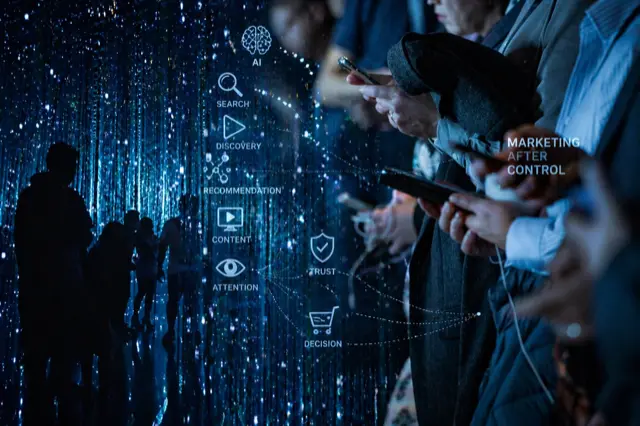
How marketing shifted from influence to system participation